Industries / factory automation
US$125,000median per hour of unplanned downtime
The board behind the HMI, the vision station and the robot cell.
Factory boards sit in cabinets beside drives and cameras: serial reach, CAN, a rail-tolerant DC input and a board rating for the enclosure. The board is a component; the cell is certified.
Not a PLC, PAC or safety controller; no SIL/PL file.
Downtime and lifecycle numbers
- US$125,000 median per hour of unplanned downtime
- US$2.3M per hour automotive; ~25 incidents a month
- 15–30 years machine life; controls supported ~10–15 years
- −20/+60 °C board rating on the picks
Sources: F41, F42, F43; ratings from spec cards.
Requirement / interface
What the cell demands, and where the board answers it.
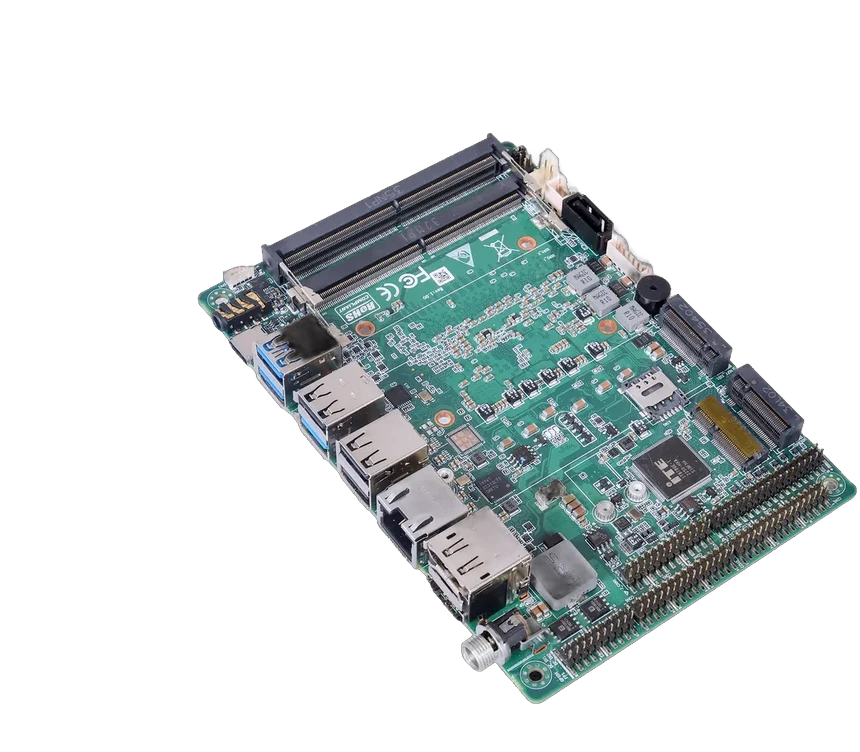
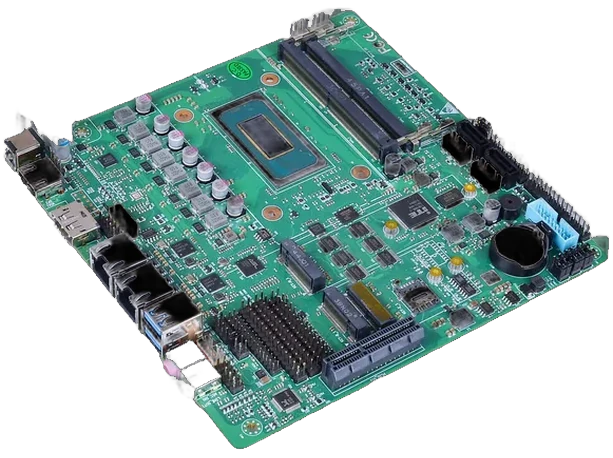
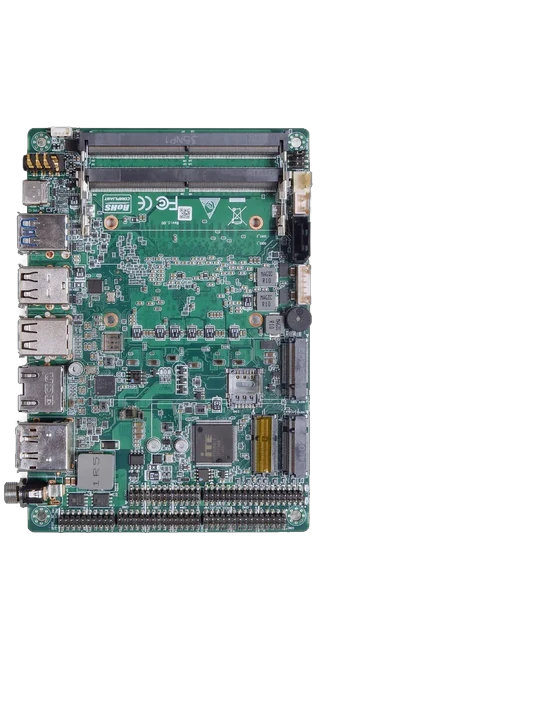
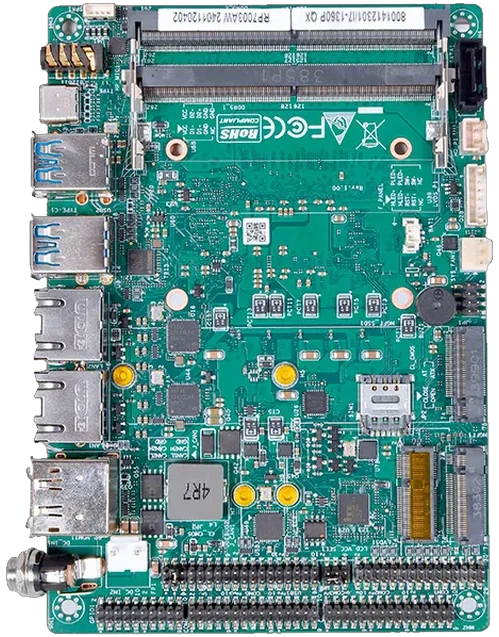
HMI, vision and robot-cell controllers ask for serial devices, CAN, a rail-tolerant DC feed and a board rated for the enclosure. RP7003AW answers on 146 × 102 mm.
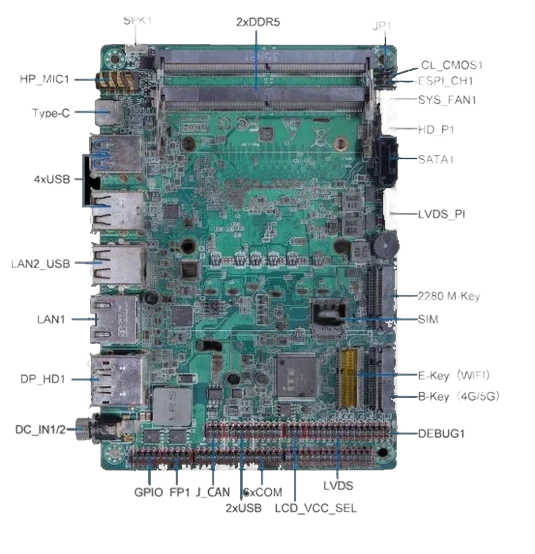
- Serial6 × COM; COM1/2 selectable RS232/485
- Fieldbus2 × CAN headers plus 8-bit GPIO
- PowerDC 9–36 V, 120 W
- Temperature−20 to +60 °C, board-level
Spec-to-model mapping
Each requirement has a value, a model, a boundary.
| Requirement | Matching spec value | Model | What is not claimed |
|---|---|---|---|
| Control-loop serial | 6 × COM; COM1/2 RS232/485 | RP7003AW | Not a PLC or PAC |
| Fieldbus | 2 × CAN, 2.0 mm headers | RP7003AW | No SIL/PL certification |
| Wide DC input | 9–36 V, 120 W | RP7003AW / UT1003AW | Not a vehicle standard |
| Watchdog | 0–255 s, sample code | TOP800B | Not a safety timer |
| Vision storage | M.2 2280 PCIe 5.0 ×4 | RP7003AW | No GPU performance claim |
| Cabinet temperature | −20 to +60 °C, board-level | All three | Not an enclosure rating |
Boundary / who certifies what
The board goes in. The enclosure gets type-tested.
Board ratings travel with the board; equipment certification with the cell. Documents on request.
Configuration example / not a named customer
One vision cell, one downtime number.
A vision station stops when its controller loses serial communication. At the cited median, one hour is US$125,000. The build pairs RP7003AW for 6 × COM and 2 × CAN with UT1003AW for Core Ultra compute; both run on 9–36 V.
US$125,000median per hour of unplanned downtime
Scenario, not a named customer; directional, not a quote.
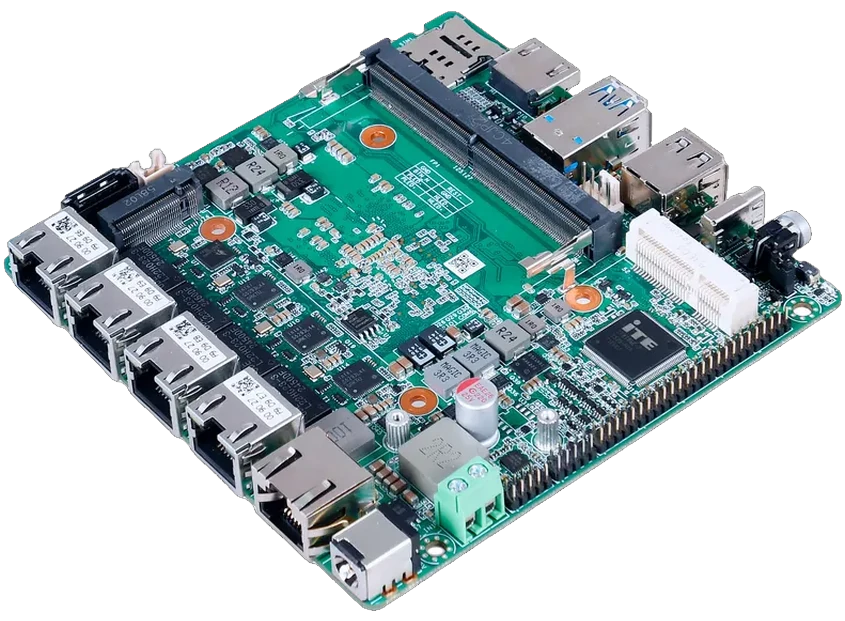
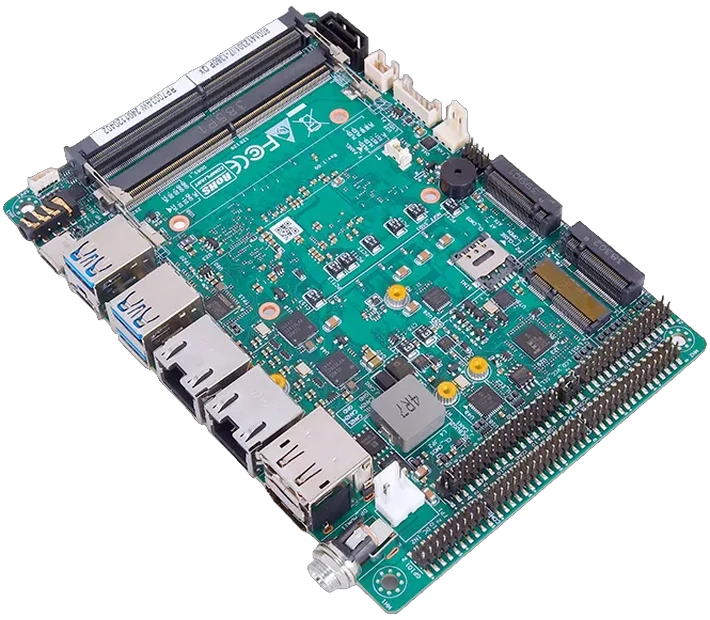
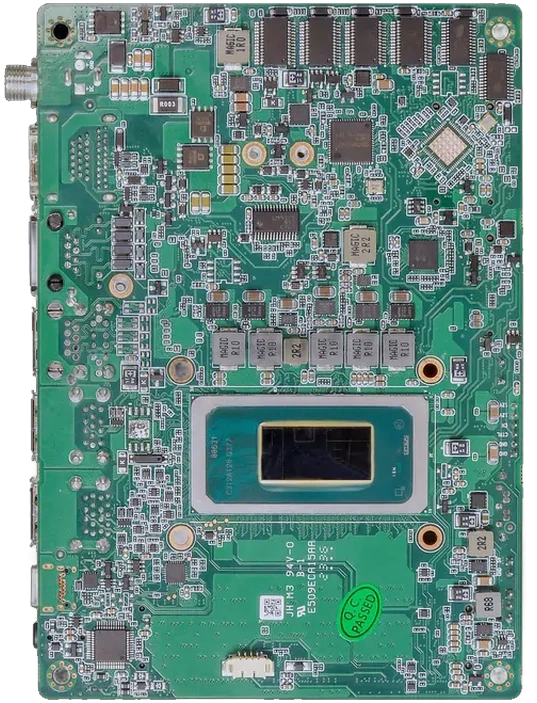
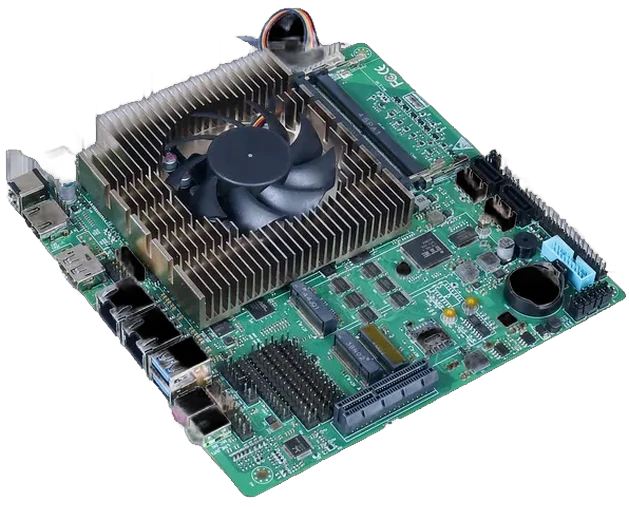
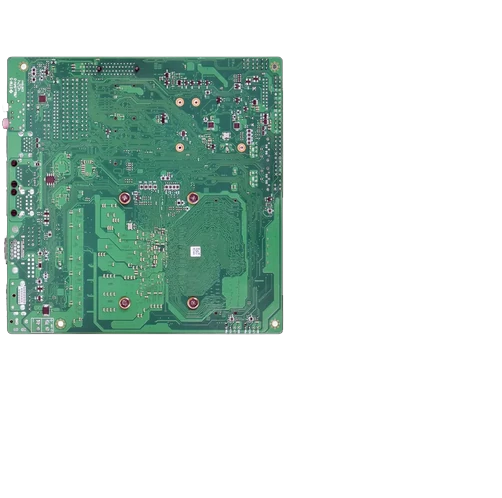
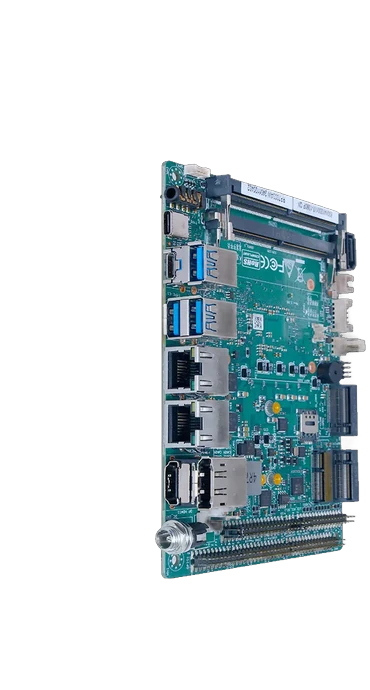
Board views / connector layout
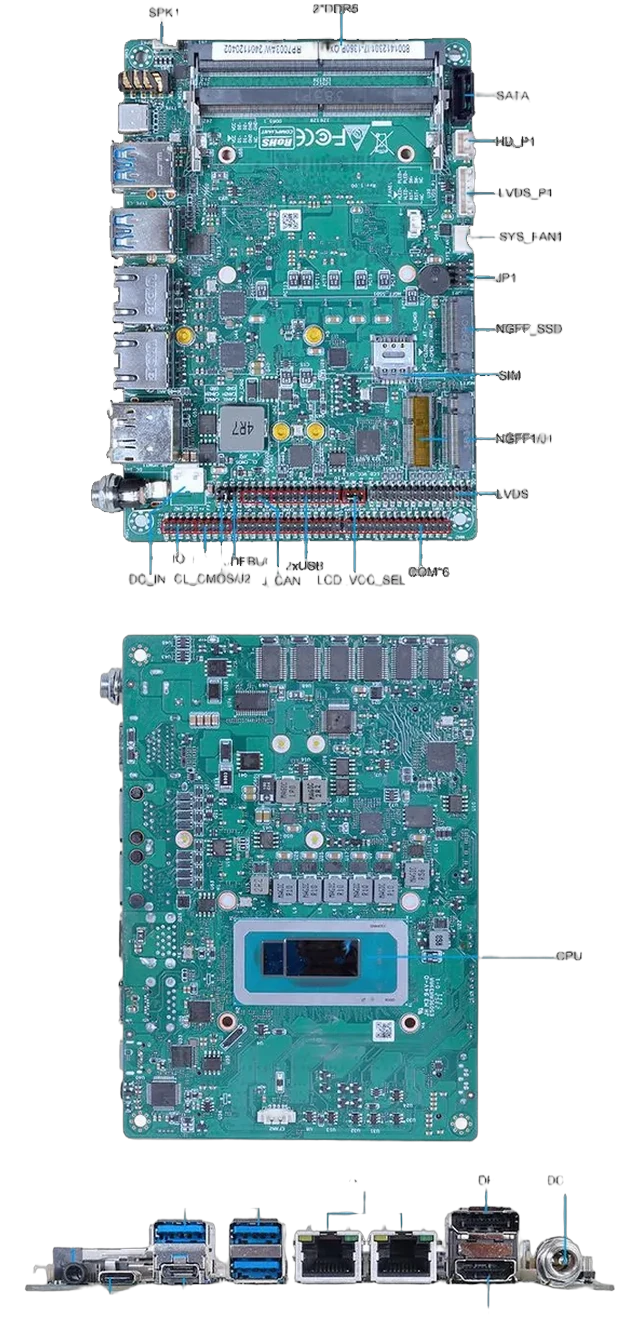
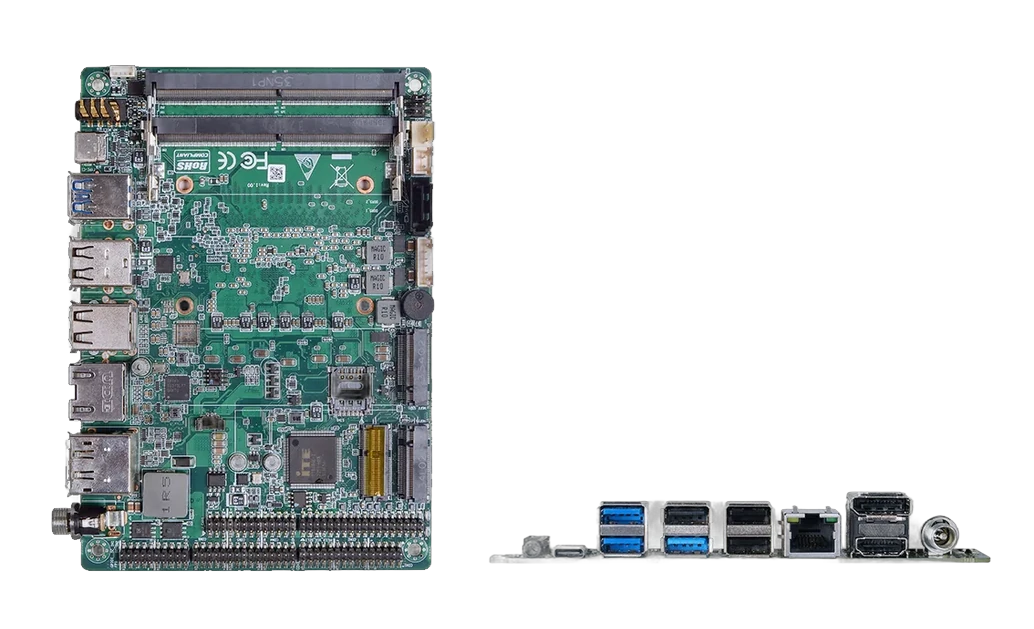
Where the serial and CAN headers sit.
Mechanical fit / two checks
Mounting and cooling decide the cabinet fit.
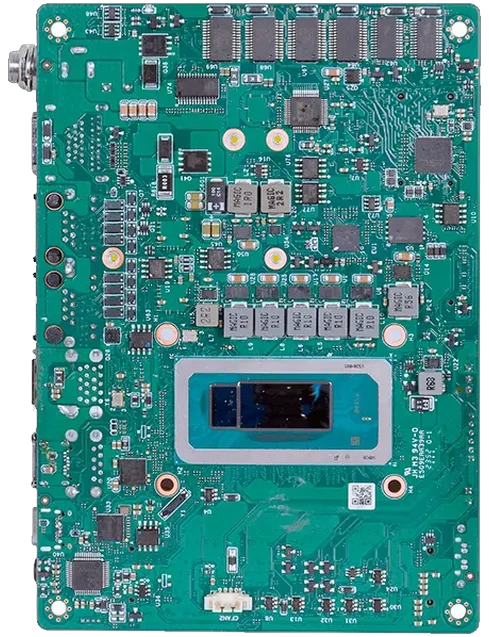
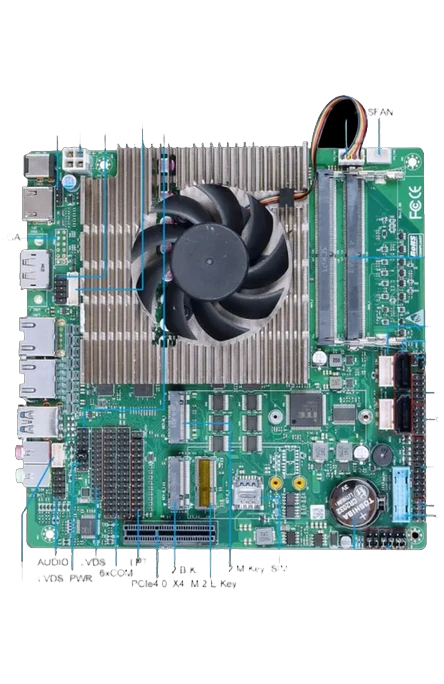
Board dimensions are 146 × 102 mm for both 3.5-inch picks and 170 × 170 mm for TOP800B. The −20 to +60 °C rating is board-level; enclosure airflow and heatsink remain the integrator's design.
Board rating is not an enclosure rating.
Adjacent envelopes / other routes
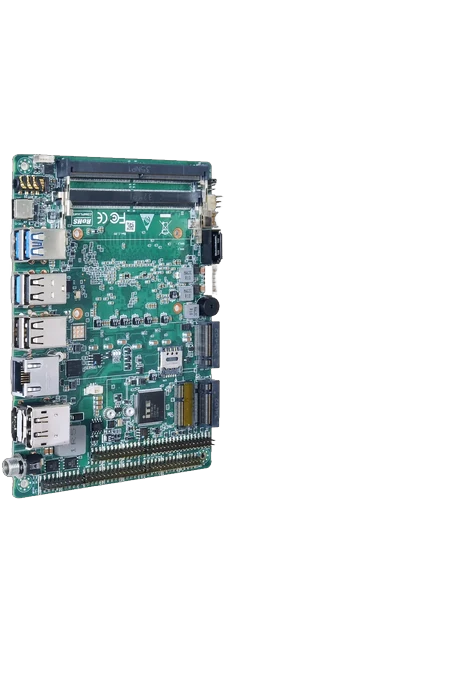
If the 3.5-inch envelope is not exact.
Before the inquiry
Certification and temperature doubts, answered.
Is the RP7003AW a PLC or safety controller?
No. It is an industrial motherboard with no SIL/PL certification on file; do not use it as a safety function.
Can the board run in a sealed cabinet?
The board is rated −20 to +60 °C. Enclosure, airflow and heatsink are the integrator's design; the rating is board-level.
What documents come with a model?
Spec card and board-level compliance documents are available per model on request. Q-BOX-S5 CE-EMC, FCC and RoHS documents are held by Piesia.
Next step / factory automation
Send the control-loop shape and the I/O count.
RP7003AW is the default serial-heavy pick. Send the COM and CAN count, rail voltage and cabinet temperature; we reply with the closest configuration. Quote within 24–48 h.
Browse 3.5-inch boards
Not a PLC, PAC or safety controller; no SIL/PL file.