Industry / Edge AI and security

Put the inference where the camera is.

Edge AI boards for vision nodes: PCIe 4.0 ×16, M.2 M/E/B, 2.5G LAN and 9–36 V.

  • PCIe 4.0 ×16
  • M.2 M / E / B
  • 2 × 2.5G LAN
  • Micro SIM
See the three models

Board is a component. No NPU TOPS, GPU performance or AI benchmark is claimed; the accelerator is the buyer's choice.

Illustrative scene: an edge AI vision node beside a production line
Illustrative scene
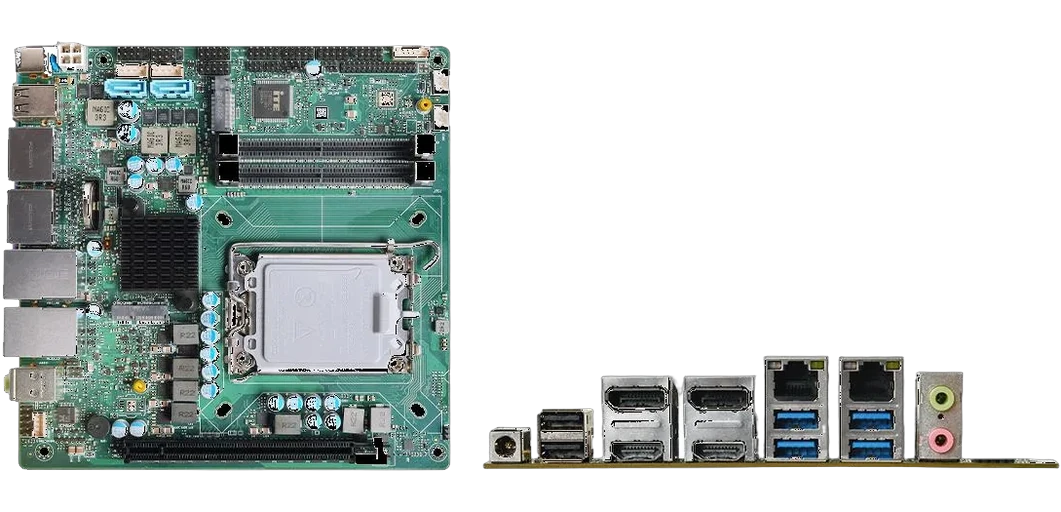
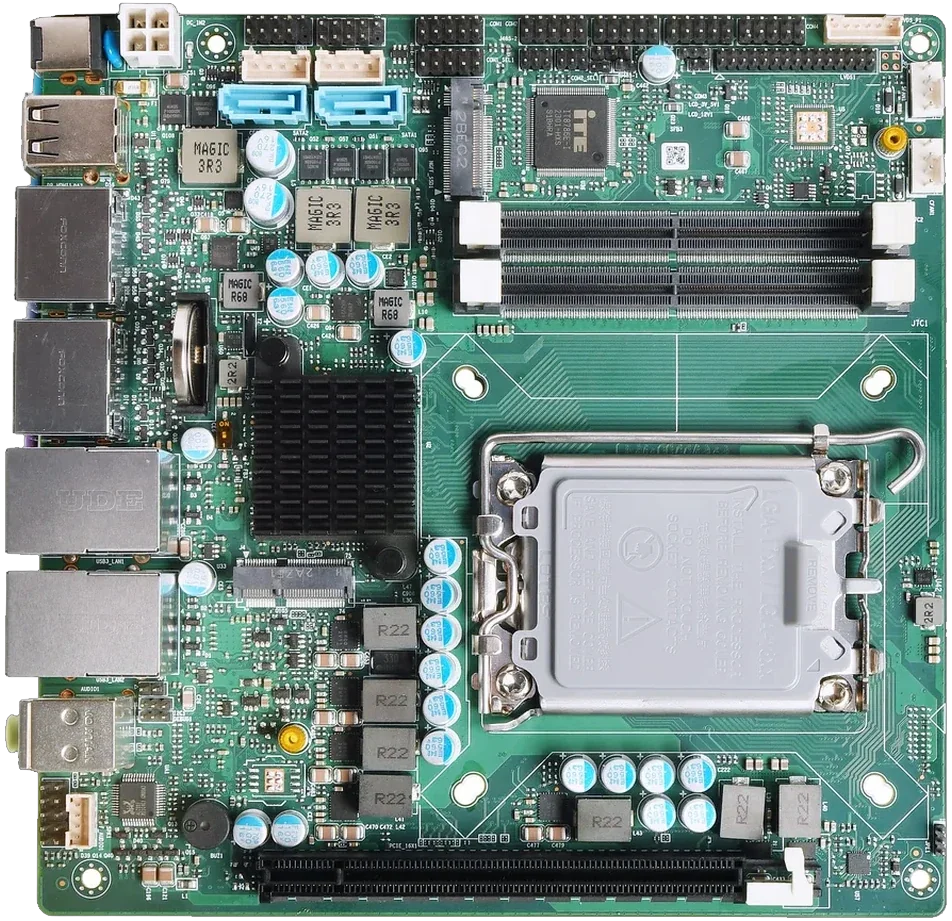
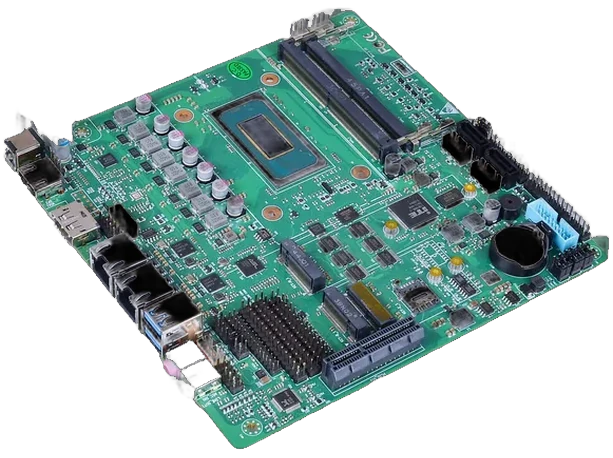
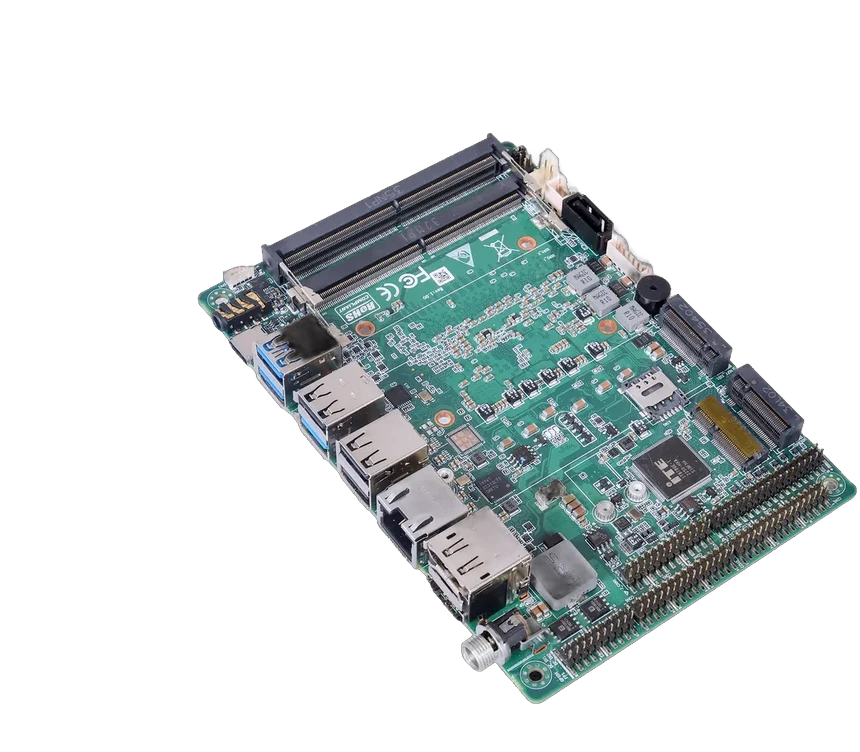
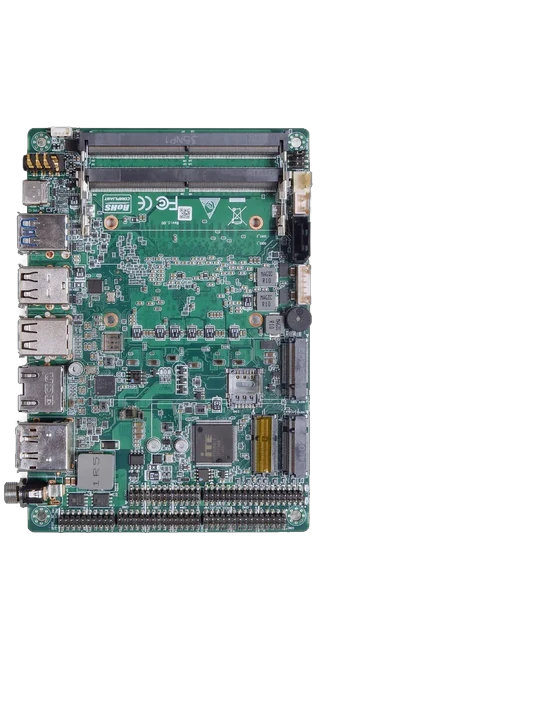
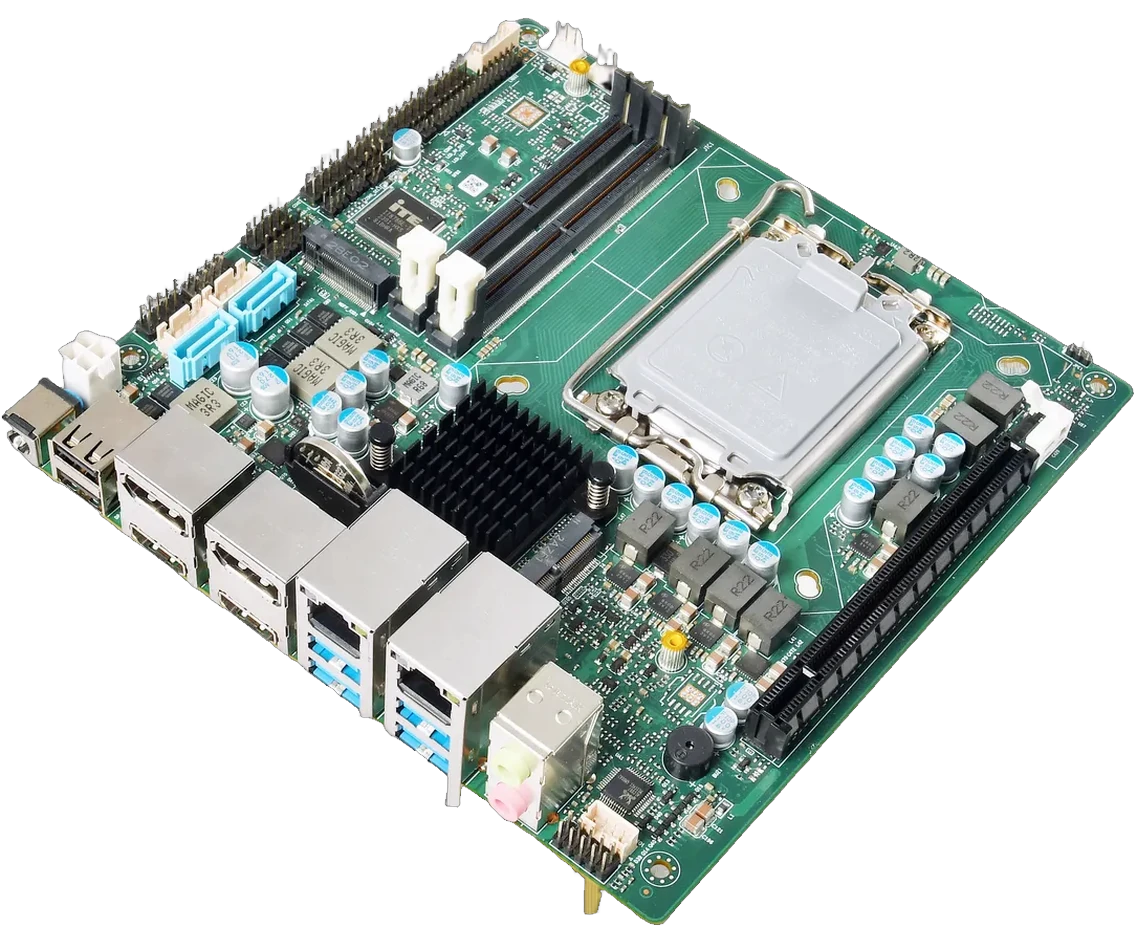
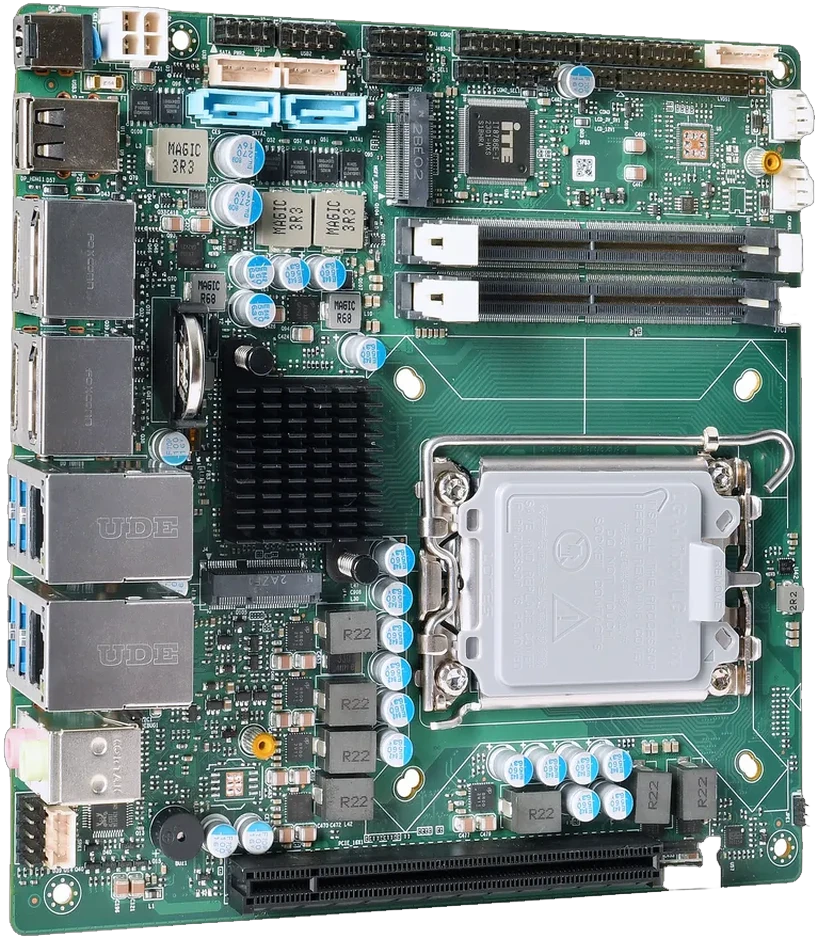
ITX660B industrial motherboard, Mini-ITX, 170 × 170 mm, front view
ITX660B · PCIe 4.0 ×16
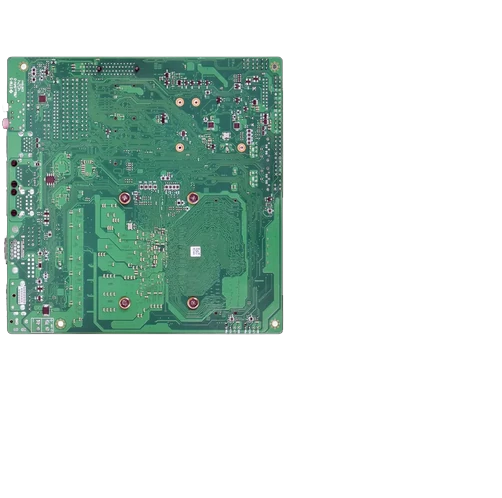
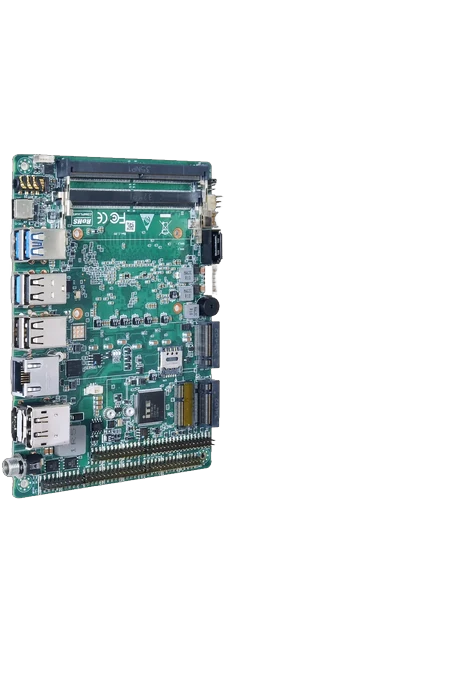
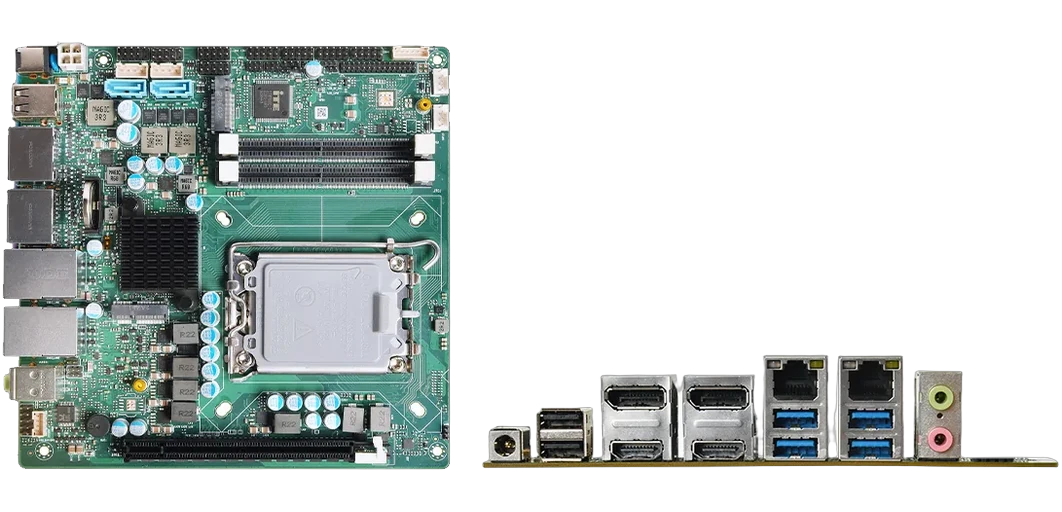
ITX660B industrial motherboard, Mini-ITX, 170 × 170 mm, rear I/O strip

The latency budget / sourced

Milliseconds decide the node.

<3 ms Visual QC target per frame, with <10% jitter.
16.7 ms The deadline of a 60 Hz control loop.
Bandwidth Often limits edge SoCs before TOPS does.
Visual QC frame budget against a control loop deadline A 16.7 millisecond control-loop bar with a 3 millisecond visual QC target and 10 percent jitter allowance drawn inside it. 3 ms target 10% 16.7 ms loop 0 3 16.7 ms
Frame budget for a 60 Hz loop. Sourced industry targets, not a measured result.

Requirement to lane

The slot decides the node.

Vision nodes fail on lane count before compute.

  • Accelerator PCIe 4.0 ×16 on ITX660B.
  • Storage M.2 M-Key 2280; PCIe 4.0 ×4 on TOP800B.
  • Uplink M.2 B-Key with SIM on TOP800B and UT1003AW.
  • Network 2 × 2.5G LAN on TOP800B; i219-LM plus i226-V on ITX660B.
Expansion lane map A board platform branching to PCIe 4.0 by 16, M.2 M-Key storage, M.2 E-Key wireless, M.2 B-Key cellular and two 2.5G LAN ports. BOARD CPU + chipset PCIe 4.0 ×16 accelerator card · ITX660B M.2 M-Key 2280 NVMe storage M.2 E-Key Wi-Fi / Bluetooth M.2 B-Key + SIM 4G / 5G module 2 × 2.5G LAN i226V
Lane map from the ITX660B, TOP800B and UT1003AW specification cards.
ITX660B industrial motherboard, Mini-ITX, 170 × 170 mm, PCIe slot area
PCIe slot area
ITX660B industrial motherboard, Mini-ITX, 170 × 170 mm, M.2 and header detail
M.2 and headers

Recommended configurations / three models

One slot, three envelopes.

Slot first, then enclosure, then power.

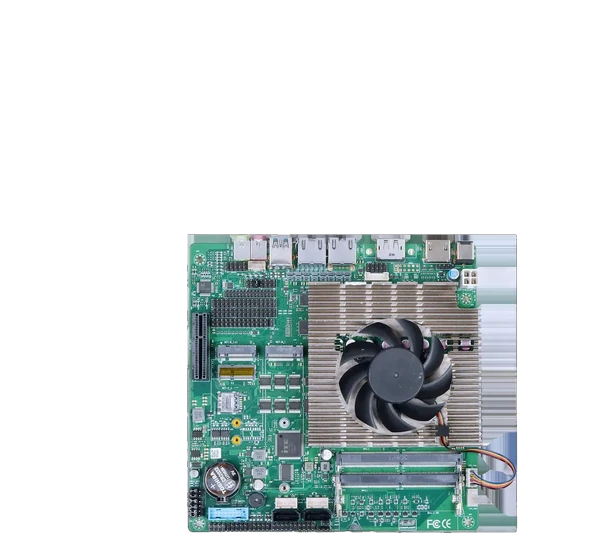
ITX660B industrial motherboard, Mini-ITX, 170 × 170 mm, front view
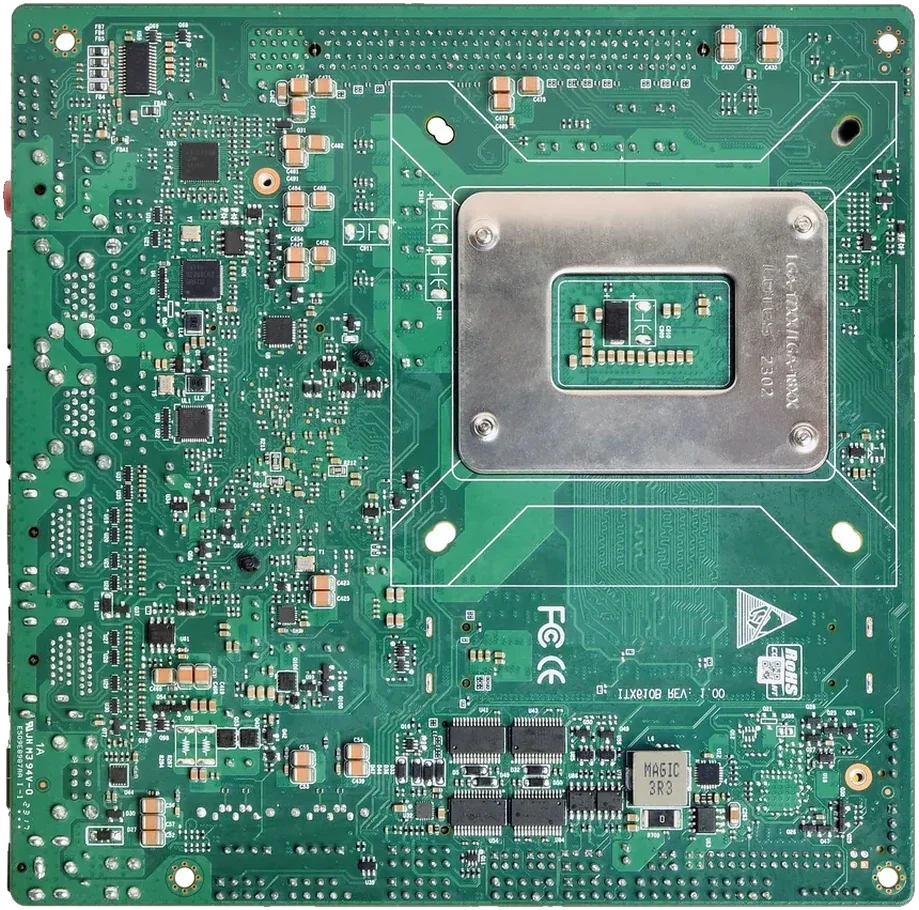
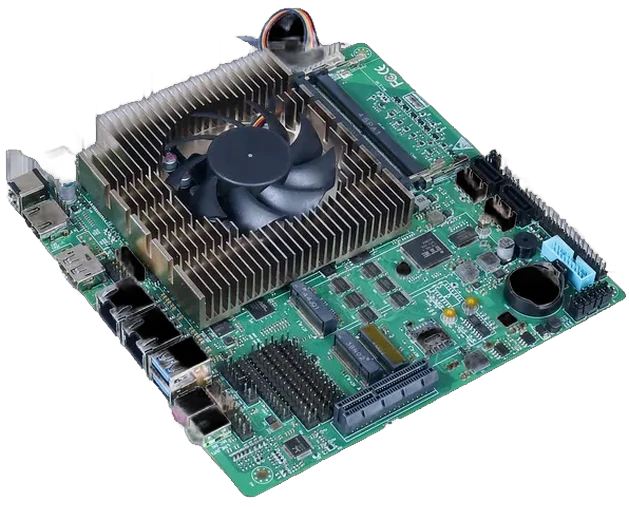
ITX660B industrial motherboard, Mini-ITX, 170 × 170 mm, heatsink view ITX660B industrial motherboard, Mini-ITX, 170 × 170 mm, rear I/O strip
PCIe ×16 / Mini-ITX

ITX660B

LGA1700 12th–14th Gen, one PCIe 4.0 ×16 slot, two HDMI 2.1 and two DP 1.4.

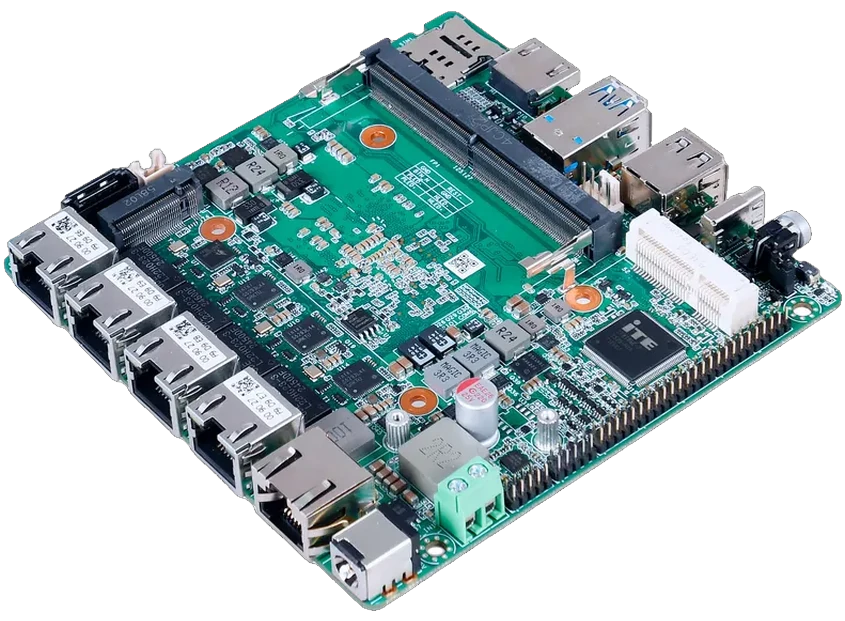
TOP800B industrial motherboard, Mini-ITX, 170 × 170 mm, front view
TOP800B industrial motherboard, Mini-ITX, 170 × 170 mm, I/O edge TOP800B industrial motherboard, Mini-ITX, 170 × 170 mm, interface view
Cellular / Mini-ITX

TOP800B

Core Ultra at 28 W, M.2 B-Key with SIM, E-Key and two 2.5G LAN.

UT1003AW industrial motherboard, 3.5-inch, 146 × 102 mm, front view
UT1003AW industrial motherboard, 3.5-inch, 146 × 102 mm, I/O edge UT1003AW industrial motherboard, 3.5-inch, 146 × 102 mm, header detail
Wide voltage / 3.5-inch

UT1003AW

Core Ultra U/H at 15 or 28 W, M.2 B-Key, SIM, CAN and 9–36 V.

Spec to model

What each requirement becomes.

Requirement Matching value Model What is not claimed
Accelerator card PCIe 4.0 ×16 ITX660B GPU performance or benchmark
NVMe capture M.2 M-Key 2280, PCIe 4.0 ×4 TOP800B Drive endurance or throughput
Cellular uplink M.2 B-Key + Micro SIM TOP800B, UT1003AW Carrier approval or band support
Dual 2.5G LAN 2 × Intel i226V TOP800B Network stack tuning
Wide-voltage cabinet DC 9–36 V UT1003AW Surge or isolation certification

Values from the model cards. The last column is the boundary.

System boundary

Board I/O stops at the edge of the node.

The board supplies lanes and ports. The camera, accelerator, enclosure and inference stack belong to the integrator, who type-tests the equipment.

Ask for the model documents, then certify the node built around the board.

Vision node signal path Camera to capture board, accelerator on PCIe, decision, then actuator or network. Certification passes to the integrator after the board. CAMERA BOARD capture + lanes ACCELERATOR PCIe 4.0 ×16 buyer's choice DECISION actuator or network integrator owns the node from here
Signal path and document hand-off.

Configuration example / visual QC

A frame budget that survives the line.

A camera node checks a moving part at line speed. The target is under 3 ms per frame with under 10 percent jitter; the loop closes in 16.7 ms.

<3 ms per frame, with <10% jitter
  • Board: ITX660B with the accelerator on PCIe 4.0 ×16.
  • Second node: TOP800B for capture and cellular backhaul.
  • Recovery: watchdog on TOP800B; sample code supplied.

A configuration example, not a named customer or a measured installation.

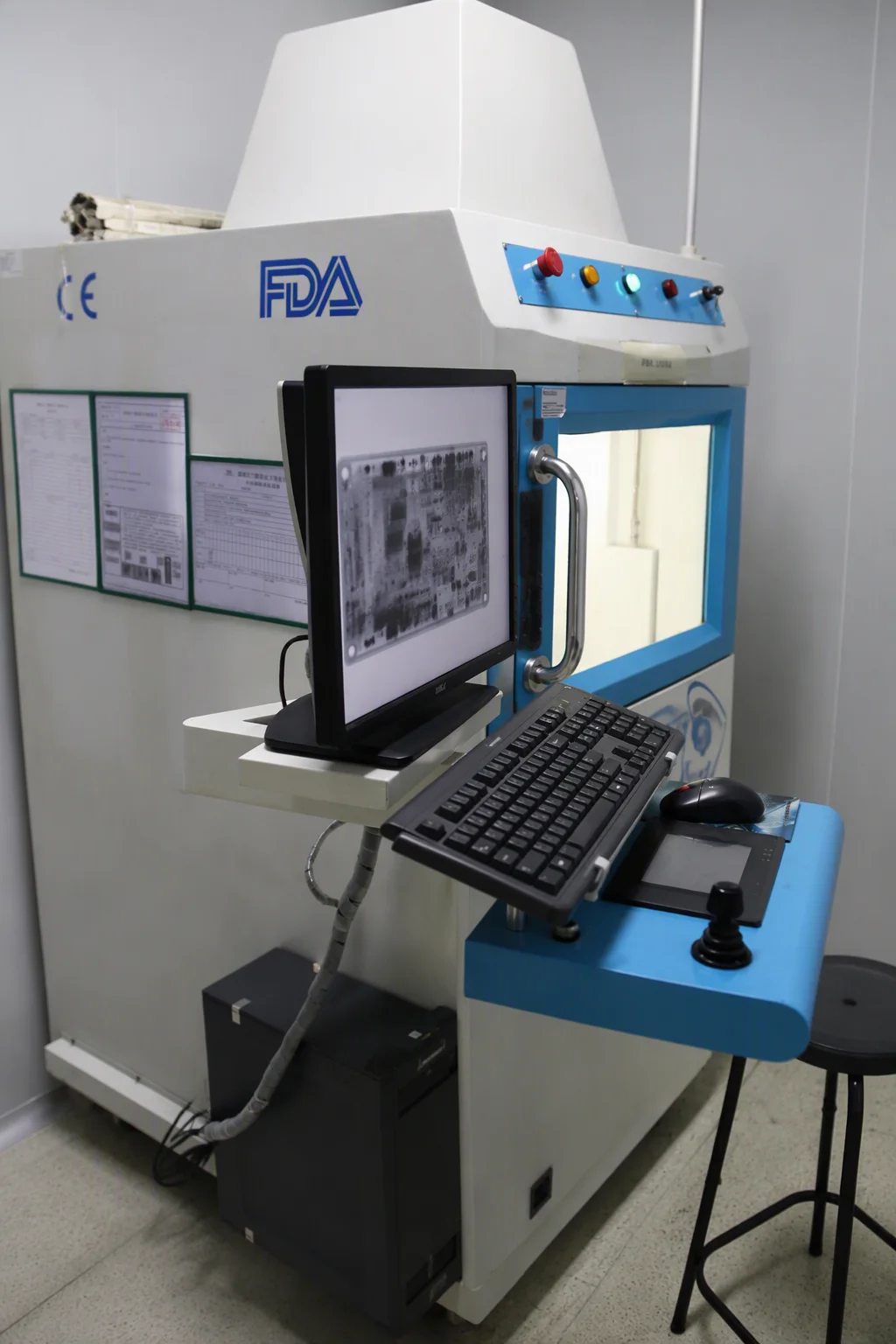
Illustrative scene: an inspection station on a production line
Illustrative scene, not a customer installation.
TOP800B industrial motherboard, Mini-ITX, 170 × 170 mm, front view
TOP800B
TOP800B industrial motherboard, Mini-ITX, 170 × 170 mm, board detail
TOP800B detail

Before the inquiry

The accelerator is your choice.

Does the board include an NPU or GPU?

No NPU TOPS, GPU performance or AI benchmark is claimed for the boards. The boards supply PCIe and M.2 lanes; the accelerator is the buyer's choice.

Can I add a cellular uplink?

TOP800B has an M.2 B-Key with a Micro SIM slot. UT1003AW has an M.2 B-Key and a SIM card slot. Module support is confirmed with the module supplier.

Is the board certified for the finished camera node?

No. Board-level documents are available on request per model. The integrator type-tests and certifies the finished equipment.

Illustrative scene: an electronics production line Illustrative scene

Inquiry / Edge AI and security

Send the slot count and the frame budget.

ITX660B, TOP800B or UT1003AW, quote within 24–48 h.

No NPU TOPS, GPU performance or AI benchmark is claimed. The accelerator is the buyer's choice.